Facebook and Instagram Leads: How to Follow Up Fast
Follow up Facebook and Instagram ad leads in minutes: get them into your CRM instantly, what to say first, a two-week cadence and how to cut junk leads.
By the Marro team8 min read
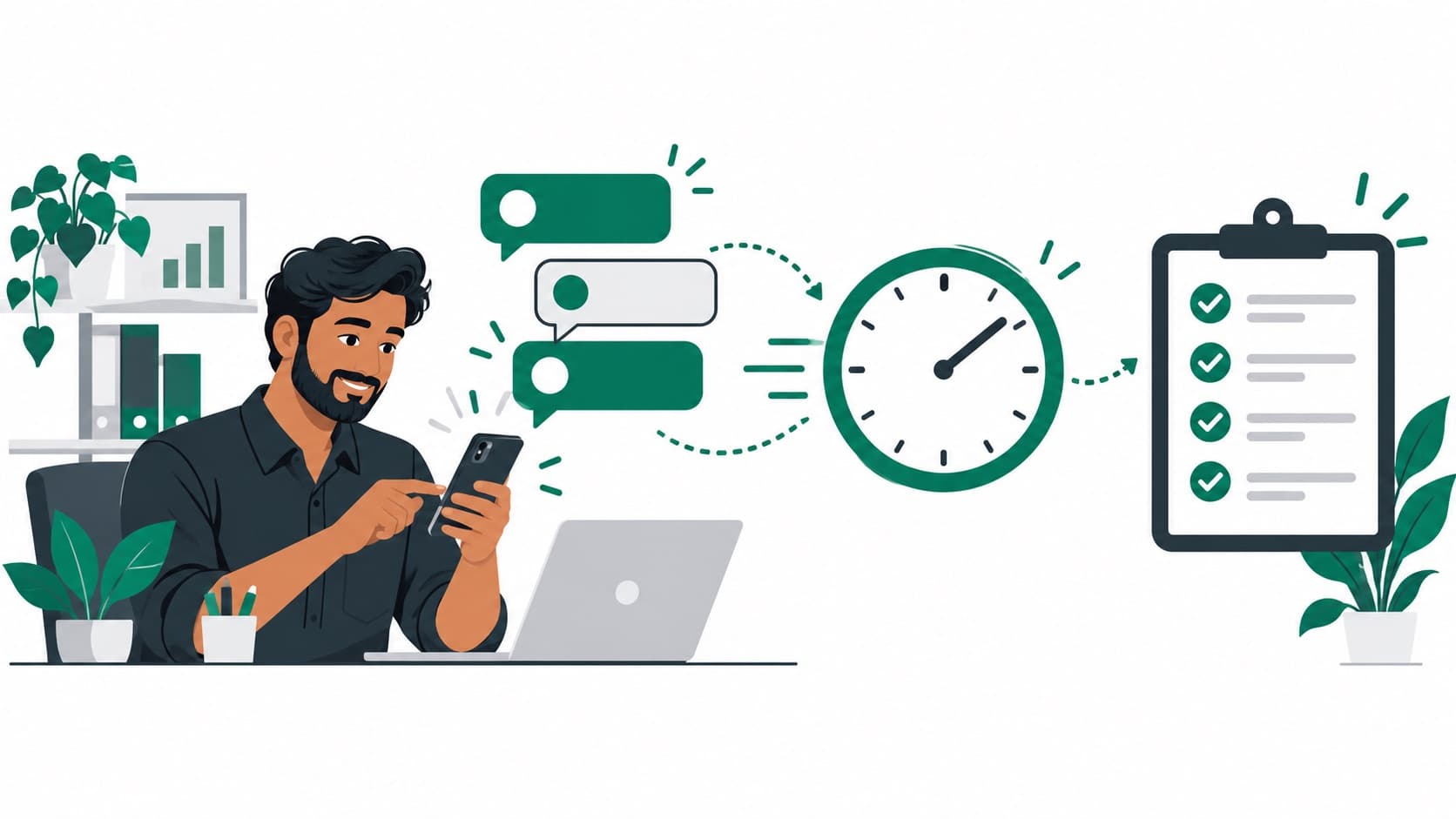
Connect your Facebook and Instagram lead forms straight to your CRM so every lead reaches an owner within seconds, then call within five minutes and send a WhatsApp message if they don’t pick up. Refer to the ad they responded to, ask two or three qualifying questions, and follow up over two weeks before closing.
Why do Facebook and Instagram leads go cold so fast?
Ad leads go cold fast because the person tapped your form in a spare minute while scrolling and moved on a minute later. They didn’t search for you; your ad found them. By the next morning many won’t remember which business they enquired with.
The window is short. A Bengaluru interior design studio spending ₹50,000 a month on Instagram might get 250 leads, and the ones it calls within minutes behave very differently from the ones it calls two days later from a downloaded spreadsheet.
Most of the loss happens before anyone speaks to the lead: forms that sit in Meta’s Leads Center till someone remembers to download them, leads that land with a salesperson on leave, or a Saturday enquiry nobody sees till Monday. Fix the route first, then the script.
How fast should you respond to a Facebook lead?
Call within five minutes of the form being submitted, during working hours. The lead is still holding their phone, still remembers your ad, and hasn’t yet filled a competitor’s form.
Measure that from submission to the first real call or personal message, not to an automatic “thanks for your interest”. An auto-reply is fine as cover, but it doesn’t count as a response.
For leads after hours, send an honest WhatsApp message straight away, like “Our counsellors are back at 10 am; shall we call you at 10:30 or 12?”, and put those leads first on the morning list. If your ads run all evening, either staff a shift till 9 pm IST or schedule the ads for the hours you can answer.
How do you get Facebook lead ads into your CRM instantly?
Connect the lead form to your CRM directly, so each lead arrives in seconds with its campaign and answers and goes straight to an owner. Downloading a CSV from Meta once a day is the single most common reason ad leads die.
Each option has a place, depending on how many leads you get and how many people share them.
- 1List every live lead form and decide which team or person owns each one.
- 2Connect your Facebook page and ad account to your CRM, with permission to read leads.
- 3Map the form questions to CRM fields such as city, budget, course or property type.
- 4Set assignment rules: by form, city or round robin, with a backup for leave and weekends.
- 5Submit a test lead from your own phone and check it arrives with the right owner and answers.
- 6Check unassigned and failed leads every morning, including the Monday after a weekend.
| Method | How fast leads arrive | When it’s fine | Where it breaks |
|---|---|---|---|
| Download CSV from Meta Leads Center | Whenever someone downloads | A handful of leads a week, one person | Leads wait hours; Meta keeps them for download for 90 days only |
| Email or Meta notification | Minutes | One owner who checks often | No assignment, no history, easy to miss on busy days |
| Zapier or Google Sheets connector | Minutes | Small team already living in Sheets | Another tool to pay for and monitor; Sheets has no reminders |
| Direct CRM integration | Seconds | Several people, more than one form or campaign | Needs the right page and ad account permissions set up once |
What should you say in the first call and message?
Name your business, name the ad or offer they responded to, and ask what made them enquire. Read their form answers before you dial instead of asking them to repeat them.
If they don’t pick up, send a WhatsApp message right after the call explaining who called and why. Most people in India won’t answer an unknown number in a meeting, but they will read a message that makes sense of the missed call. More examples are in the WhatsApp follow-up templates.
Hi {name}, {agent} from {business} here. I just called about the {offer} form you filled on {Instagram / Facebook}. Would {time_1} or {time_2} IST be better for a quick call?
Hi {name}, thanks for asking about {project} in {location}. Are you looking to move in or to invest? I can share the price list and arrange a site visit this weekend.
Hi {name}, thanks for your interest in {course}. Which intake are you planning for? I can send the fee details or set up a call with a counsellor.
Hi {name}, thanks for enquiring about {service}. To give you a rough estimate, could you tell me {key_detail, e.g. the flat size or number of rooms}?
What should you do if an ad lead doesn’t pick up?
Keep going for about two weeks before you close the lead: two calls on day 0, a WhatsApp message after each missed call, then contact on day 1, day 3, day 7 and a closing message around day 14. Ad leads need more attempts than referrals because they’re busier and less committed.
Record every attempt on the lead, so a teammate covering for the owner doesn’t call three times in an hour. Mark “unreachable” separately from “not interested”: someone who never picked up hasn’t said no. The full cadence and the reasoning behind it are in the lead follow-up process guide.
If a lead asks you to stop, stop that day and mark it on the record. Ad leads gave you their number for one enquiry, not for every promotion next year.
How do you cut junk leads from Facebook lead forms?
Add one or two questions that only a real buyer can answer, and use Meta’s “higher intent” form type, which adds a review step before submitting. You’ll get fewer leads, and far more of them will pick up the phone.
Pre-filled forms are easy to submit by accident, so a question about timing or budget filters out casual taps. Meta explains the form options in its guide to lead ads and instant forms.
Then qualify on the first call with two or three questions, not ten. A real estate team asks area, budget and when they plan to buy; an education counsellor asks course, intake and whether the student has taken IELTS or PTE. Score the answers so the strongest leads get called back first.
- Ask timing: “When are you planning to start / buy / move?”
- Ask a budget band with three or four choices in ₹ lakh.
- Ask city or area, so out-of-area leads are flagged before anyone calls.
- Match the form promise to the ad: a form that says “free consultation” shouldn’t lead to a sales pitch.
Can WhatsApp and AI agents cover evenings and weekends?
Yes, they can keep a lead warm and answer the first questions, as long as they work from facts you’ve added and hand over to a person for anything that needs judgement. They cover the hours when the owner isn’t there.
In Marro, ad leads arrive in the CRM with their source, campaign and form answers, are matched by phone or email so repeat enquiries don’t create duplicates, and are assigned to an owner automatically. The lead’s WhatsApp chat sits in the shared Inbox, beside Instagram DMs and Messenger chats, where the chat receptionist can reply from your own facts when the chat’s owner is away and hands back the moment someone takes over.
With AI calling, staff start a call from the lead, and the agent calls in the lead’s language. The call is recorded and written up, and the call reviewer logs the outcome and the next follow-up. That suits high-volume first qualification; see AI calling for lead qualification. For a complex sale or an upset customer, a person should be on the phone.
How do you know whether your Facebook and Instagram leads are working?
Judge campaigns by cost per qualified lead and cost per sale, not cost per lead. A ₹90 lead that never picks up is more expensive than a ₹300 lead that books a visit.
Take a Pune coaching institute that gets 400 leads in a month at ₹120 each, so ₹48,000 spent. It speaks to 220, qualifies 90 and enrols 24. That’s ₹2,000 per enrolment. A second campaign with half as many leads at twice the price that enrols the same number costs the same per enrolment with half the calling work.
Before you change the ads, check the follow-up. If only half the leads were ever reached, the cheapest improvement is calling faster and finishing the cadence.
- Leads received, and how many reached the CRM with an owner.
- Median time from form submission to first call.
- Contact rate: leads spoken to, out of leads received.
- Qualified leads and the cost of each.
- Visits, demos or appointments booked and actually attended.
- Sales or enrolments by campaign and form, over 30 to 60 days.