Lead Follow-Up: A Simple Process That Converts
How to follow up leads in India: reply in 5 minutes, a 14-day cadence, what to say on WhatsApp and calls, and the numbers that show your process works.
By the Marro team9 min read
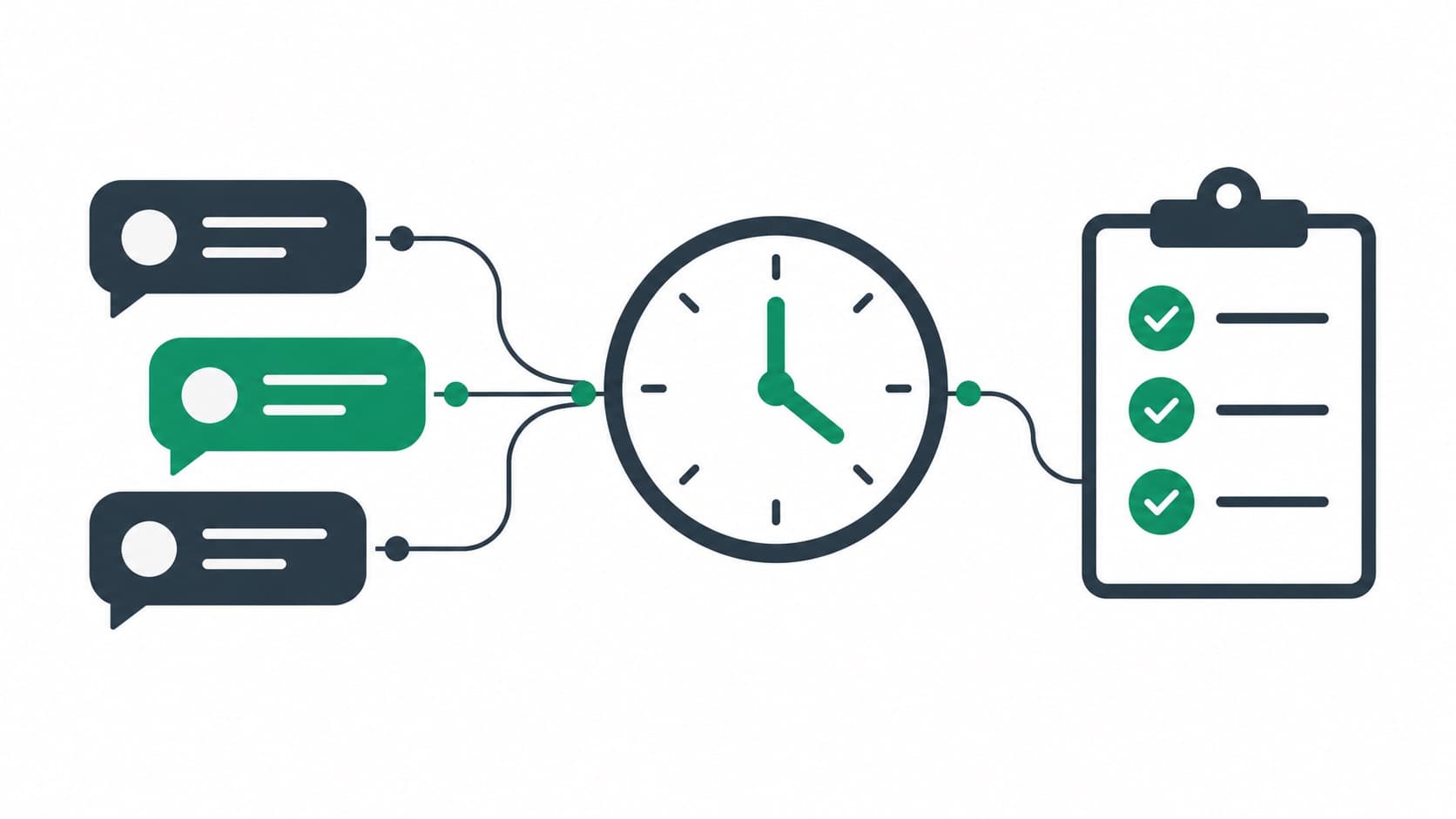
Follow up a new lead within five minutes, by call first and WhatsApp second, then keep going on a fixed cadence: same day, day 1, day 3, day 7 and day 14. Give every lead one owner and a dated next step, add something useful in each message, and close the lead politely once they stop replying.
What is lead follow-up, and why do most leads go cold?
Lead follow-up is everything your team does between the moment someone enquires and the moment they buy, say no or stop replying. Most leads go cold because nobody called back fast enough or the second and third follow-ups never happened.
Picture a Pune admissions consultancy in May, getting 60 enquiries a day from forms, ads and WhatsApp. Two counsellors call the fresh ones, the rest wait till evening, and anything older than three days quietly disappears from everyone’s mind. Nobody decided to drop those students; no system put them back in front of someone.
A follow-up process fixes that with three things: one owner per lead, a next step with a date on every open lead, and a cadence everyone follows. The hard part is doing it every day, including your busiest week.
How fast should you follow up a new lead?
Call within five minutes during working hours, and within the first hour at the latest. The person filled your form because they were thinking about the problem right then; an hour later they’re in a meeting, and by tomorrow they’ve enquired with two of your competitors.
Speed matters most for ad leads. People tap a Facebook or Instagram form in a spare moment and forget which business they asked, so a call the next morning reaches people who half-remember you. The guide to Facebook and Instagram lead follow-up covers that case in detail.
For enquiries that arrive after hours, send an honest WhatsApp acknowledgement straight away and put the first call at the top of tomorrow’s list. Something like “Our team is back at 10 am, would 10:30 or 12 work for a quick call?” keeps the lead warm without promising a counsellor who isn’t there.
How many times should you follow up with a lead?
Plan for five to seven attempts over about two weeks before you close a lead that hasn’t replied. Many teams stop after one or two unanswered calls, which means they give up on people who were simply busy.
Mix the channels and space them out so no touch feels pushy. This cadence works for most enquiry-driven businesses in India, from coaching institutes to brokers. If the lead tells you when to call, that date replaces the schedule.
| When | Channel | What to do |
|---|---|---|
| Within 5 minutes | Call | Confirm what they asked for and agree the next step. |
| If no answer, right after | Say who you are, why you called, and offer two call times. | |
| Same day, evening | Call | Try once more, between 6 and 8 pm IST when people are free. |
| Day 1 | Share the one thing they asked about: fees, brochure, floor plan, price list. | |
| Day 3 | Call | Ask if they had a chance to look and answer questions. |
| Day 7 | Add something new, such as a batch date, an open house or a case example. | |
| Day 14 | Send a polite closing message and pause follow-ups. |
What should you say in each follow-up?
Every message should do three jobs: remind them who you are, give them one useful thing, and ask one easy question. “Just checking in” does none of those, which is why nobody replies to it.
Refer to what they actually asked about. If Meera enquired about a 2 BHK in Wakad and a weekend visit, your follow-up should name the project and offer Saturday at 11 or Sunday at 4, not ask her to “share her requirements” again. For many more ready-to-use messages, see the WhatsApp follow-up templates.
Hi {name}, this is {agent} from {business}. I just called about your enquiry for {service}. Would a quick call at {time_1} or {time_2} IST work better?
Hi {name}, here are the {fee details / floor plan / price list} for {service} you asked about: {link}. Happy to walk you through it on a 5-minute call. When suits you?
Hi {name}, quick update on {service}: {new_detail, e.g. the June batch opens on 10 June}. Would you like me to hold a counselling slot for you this week?
Hi {name}, thanks for your time today. As discussed, I’ll send {agreed_item} by {date}, and we’ll speak again on {next_date} about {next_step}.
Should you follow up by phone or WhatsApp?
Use both. The call does the selling and WhatsApp carries everything around it. In India most people won’t pick up an unknown number at work, but almost everyone reads a WhatsApp message within the hour.
A good rhythm is to call first, then send a WhatsApp message that explains the missed call and offers a time. Once you’ve spoken, move documents, links, location pins and reminders to WhatsApp, where the lead can find them again. If someone says “just message me”, respect that and record it so the next person on your team doesn’t start ringing.
Call only people who asked to hear from you. Promotional calls and SMS in India sit under TRAI’s commercial communication rules, which means registering your SMS headers and templates on DLT and not cold-calling numbers on the National Customer Preference Register. A lead who just filled your form is a very different case from a bought list.
How do you build a lead follow-up process your team will actually run?
Write it down on one page, put it in your CRM, and check it every morning. A process that lives in the owner’s head falls apart the first week someone is on leave.
- 1Bring every lead into one list: website forms, Facebook and Instagram ads, WhatsApp, walk-ins and calls. If leads still live in five Excel sheets, move them into one place first.
- 2Assign each lead to one named owner the moment it arrives, by source, city, course or round robin, and name a backup for leave and weekends.
- 3Set a response target your team can hit, such as first call within 5 minutes between 10 am and 7 pm IST, and the first hour of the next working day for the rest.
- 4Log what the lead said after every call, not just “called”. Budget, timeline and the real question are what the next follow-up is built on.
- 5Give every open lead a next step with a date before you leave it. No lead should sit in an open stage without one.
- 6Start each day with the overdue list. Overdue follow-ups go first, before any new calls.
- 7Close leads on purpose: converted, not interested, wrong fit or unreachable after the full cadence, with a reason recorded.
What should you do when a lead goes quiet?
Finish the cadence, then send a short closing message that gives them an easy way back. Closing messages often get more replies than the five before them, because they remove the pressure.
Don’t invent urgency. “Only two seats left” when there are twenty loses trust fast, and a parent who catches it will tell other parents. If there’s a real deadline, like an application closing on 15 June or a price revision from 1 July, say it plainly and once.
When a lead says no or asks you to stop, mark it on the record that day and stop. Under India’s Digital Personal Data Protection Act, 2023, people can withdraw consent to the use of their data, and a business that keeps messaging after a clear “stop” looks careless.
Hi {name}, I haven’t heard back about {service}, so I’ll stop following up for now. If you’d like to pick it up later, just reply here and I’ll help.
Hi {name}, you asked us to reconnect about {topic} around {date}. Would {time_1} or {time_2} IST suit you?
How does a CRM stop leads from being forgotten?
A CRM puts every lead, its owner, its history and its next follow-up date in one place, and reminds the right person when that date comes. Its job is to make the next step impossible to lose.
In Marro’s CRM, leads from forms, ads, WhatsApp and imports land on one record, duplicates are matched by phone or email, and each lead is assigned the moment it arrives. Follow-ups sit on dates, and reminders reach staff on the web, in the app and on WhatsApp. The follow-up coordinator, one of Marro’s AI agents, plans each lead’s next step after every call, chat and note, on its own. Read what an agentic CRM is for how that differs from a plain reminder.
A two-person team with 10 leads a week can run on a shared Google Sheet with a “next follow-up” column. Move to a CRM once you have several people sharing leads, more than one source, or overdue follow-ups you can’t see at a glance. For admissions teams, the education setup shows the stages Marro creates at sign-up; for brokers, see real estate.
What numbers show your follow-up process is working?
Track four numbers every week: first-response time, the share of leads you actually spoke to, overdue follow-ups, and conversion by source. They show whether a bad month was the leads or the follow-up.
Say a Gurugram broker gets 120 leads in a month, speaks to 70 and books 18 site visits. If only 70 of 120 were ever reached, the first fix is calling faster and finishing the cadence, not buying more leads. A healthy team usually aims to speak to well over half of its leads and to keep overdue follow-ups close to zero at the start of each day.
- Median time from enquiry to first call, by source and by shift.
- Contact rate: leads spoken to, divided by leads received.
- Overdue follow-ups each morning, by owner.
- Leads in an open stage with no next step at all.
- Conversion by source, so you compare ads, website and referrals fairly.
- Reasons for lost leads, read out in a short weekly review.